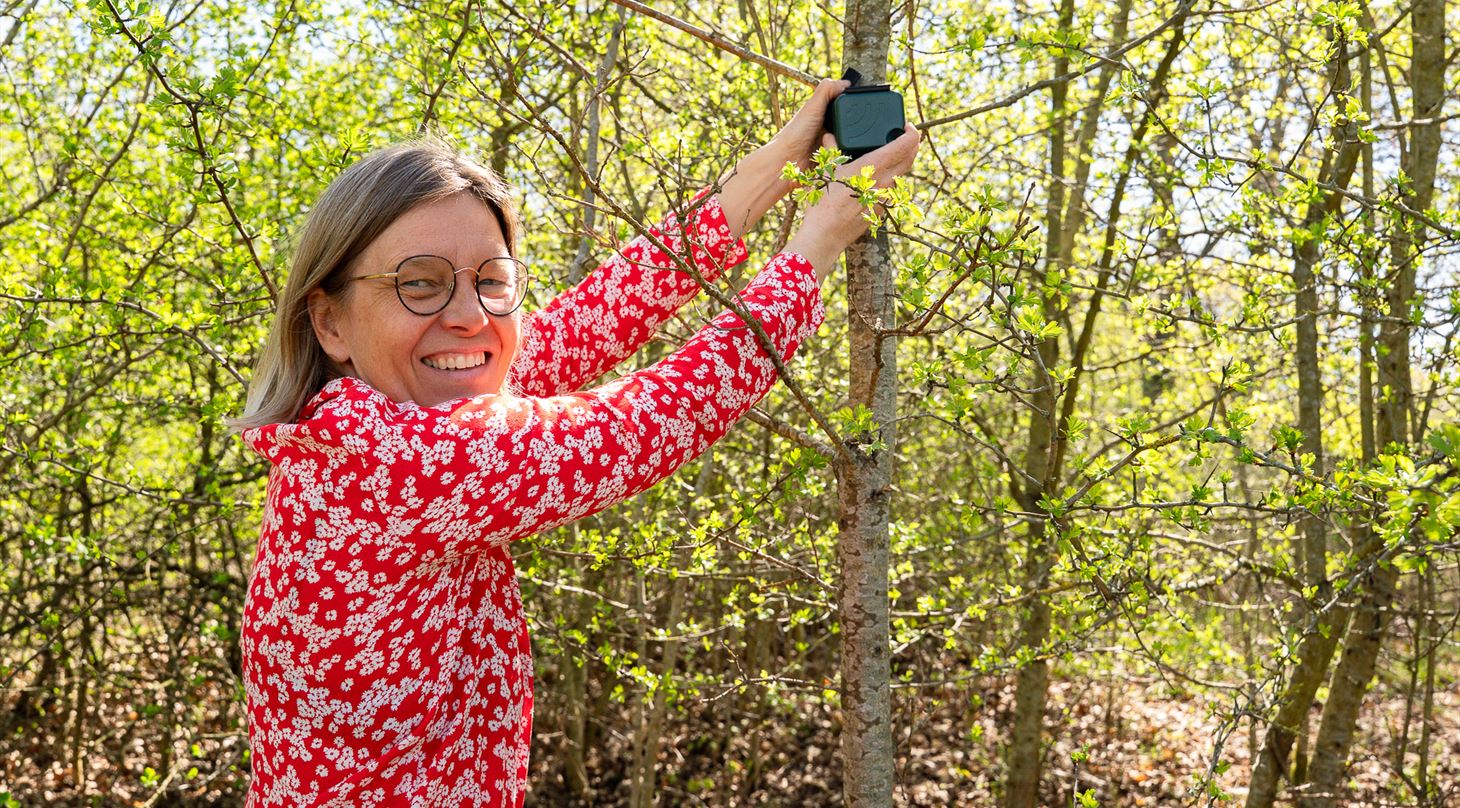
VIBES: AI solutions to measure biodiversity in rewilding and regenerative agriculture

Project period: January 2026 – October 2028
Supported by 15 June Foundation
The project will assess whether automated monitoring with sensors and artificial intelligence can be used to measure the effects of rewilding and regenerative agriculture in Danish landscapes.
Rewilding, where nature is allowed to restore itself with minimal human intervention, has become a popular tool to strengthen biodiversity. The aim is to create robust ecosystems in which natural processes can unfold and threatened species are given better living conditions. Similarly, regenerative agriculture uses methods designed to improve soil health and create habitats for insects, birds and other wildlife.
But how do we document whether these measures actually work? That is what we aim to answer in the project VIBES – Validated Integrated Biodiversity Evaluation of Sensors.
Ensuring data quality
Traditional biodiversity monitoring is based on physical counts along fixed routes – so‑called transects – where biologists and taxonomic experts walk through the landscape and record species. This method is resource‑intensive, provides only a snapshot in time and cannot easily be scaled to large areas or many sites.
- There is a need for new methods that can document the effect of biodiversity measures over time and across many areas. Automated sensors and AI‑based species recognition still lack validation and clear guidelines for how they are best applied, says Machteld Verzijden, specialist and project manager at the Danish Technological Institute.
Denmark is facing stricter requirements for nature and biodiversity efforts through both political agreements and forthcoming EU regulations that must be translated into concrete actions. This increases the need for reliable, cost‑effective methods to document the impact of nature and agricultural measures.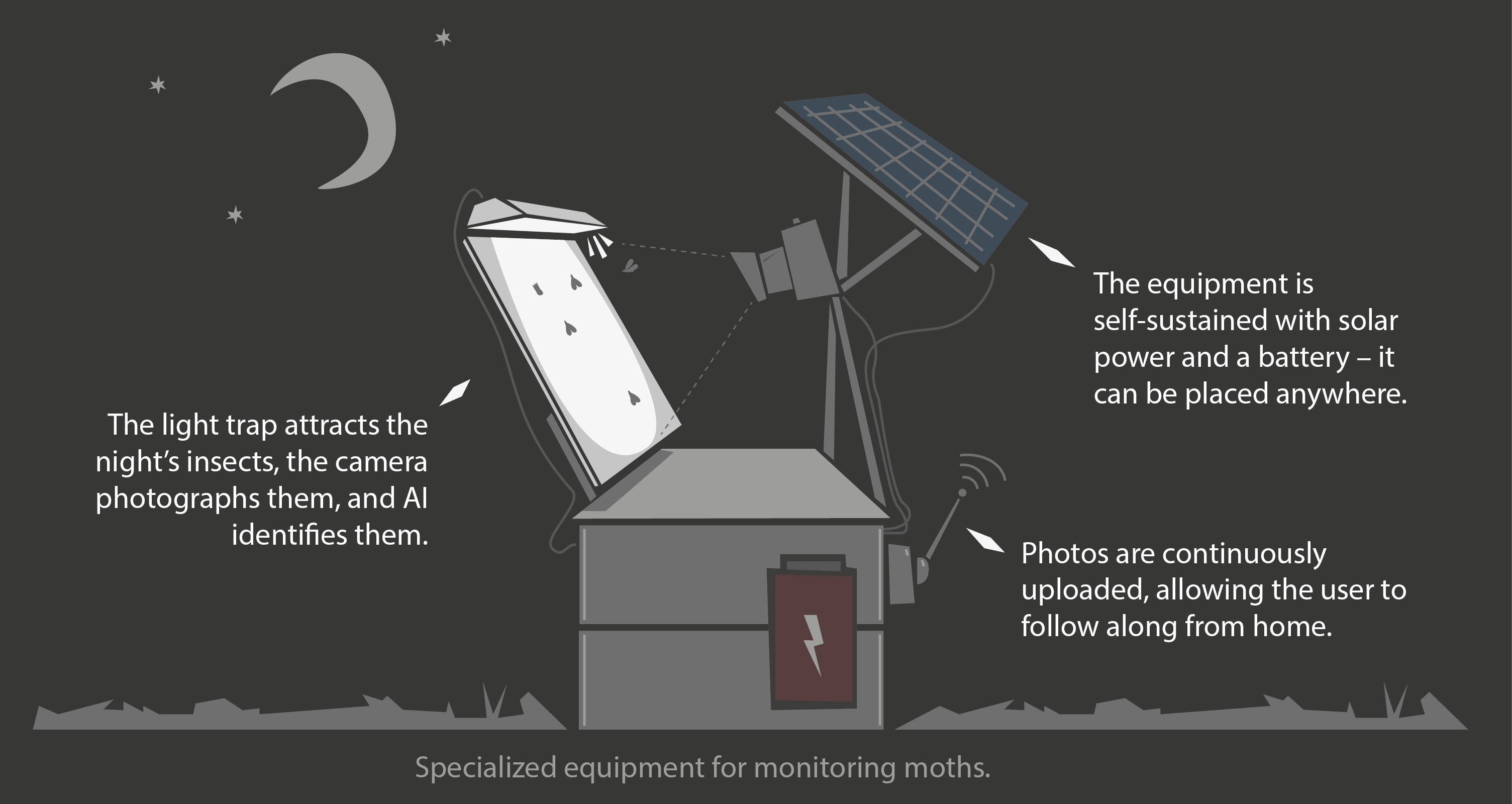
Three years with sensors and artificial intelligence
VIBES will address this knowledge gap by testing different types of sensors, including audio recorders and camera traps, in six areas with varying biodiversity over a three‑year period. The project focuses on birds and nocturnal moths and has three main objectives:
- To establish best practice for automated biodiversity monitoring: How many units are required, how long should they be in operation, and which sensor types are suited to which purposes?
- To develop a user‑friendly interface in collaboration with landowners, land managers and consultants, which integrates data from different sensors and makes it easy to extract the key indicators users need.
- To compare the performance of different monitoring devices so that both commercial farms and nature projects can choose the most cost‑effective solutions without compromising data quality.
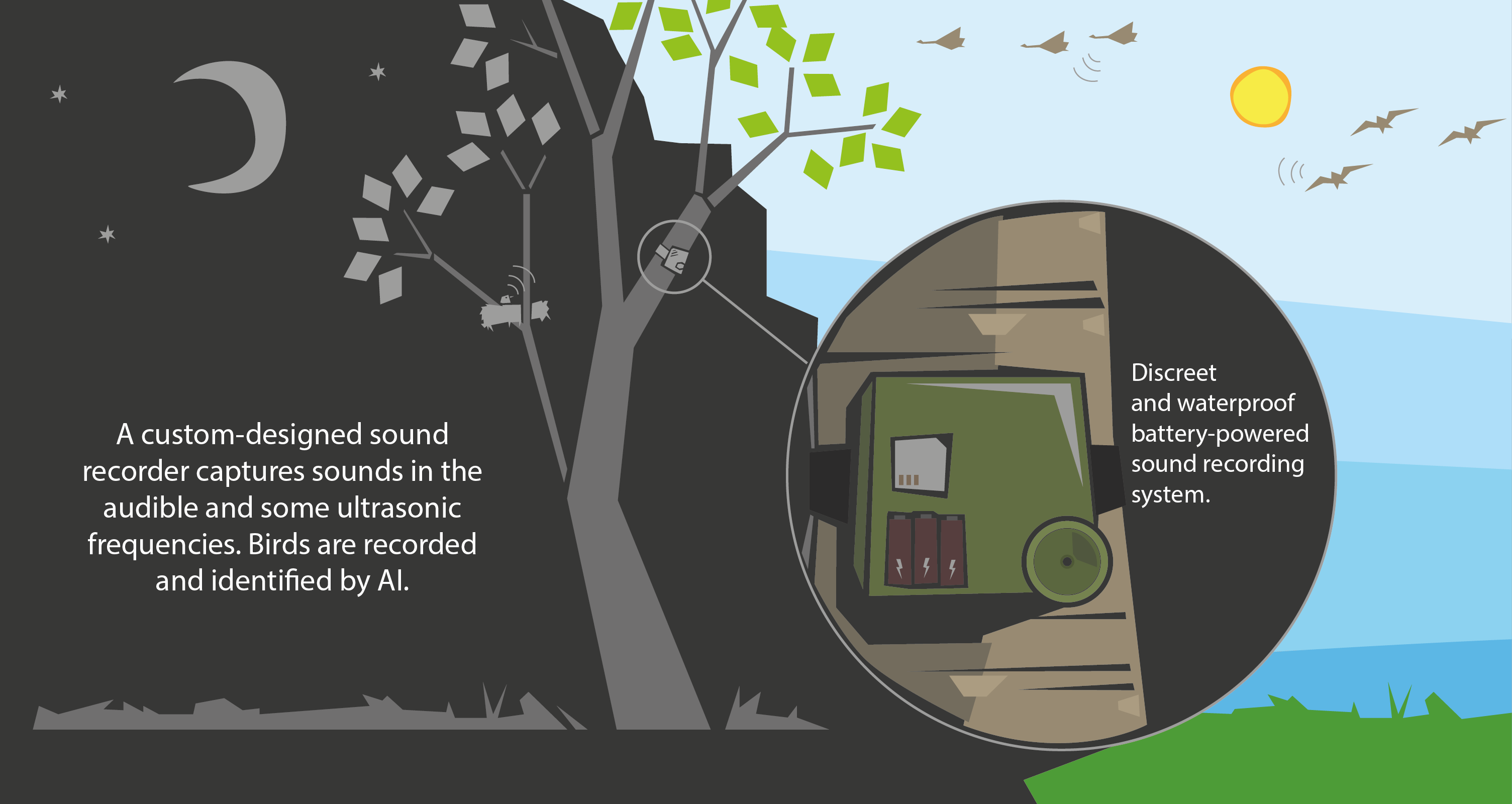 Visualisation of the audio recorders, which are one of the technologies used in the project.
Users at the centre
A central part of the project is to involve end‑users early in the process. Through workshops with landowners, land managers and consultants, input will be collected for the development of the user interface and for how the results can best support concrete management decisions.
- We want to ensure that the solution fits the contexts in which it will be used – from commercial agriculture to rewilding projects. The goal is to create a tool that is easy to use and delivers the data that users actually need, says Machteld Verzijden.
Articles
Project partner
- Department of Ecoscience, Aarhus University